

Skip to content Skip to sidebar Skip to footer

Carnot Engines Redefining Heavy-Duty Power for a Decarbonized Future

The Challenge: How to replace the Diesel Engine?

At Carnot we are taking on the biggest challenge of our age; decarbonizing heavy-duty power and how to replace diesel engines. 

Hard-to-abate sectors — from shipping to long-haul road transport to remote power generation — face the biggest challenge in reaching net zero. Traditional internal combustion engine and especially diesel engines, waste much of their fuel energy as heat, and many cannot operate effectively on next-generation low-carbon fuels like hydrogen or ammonia.

Decarbonizing heavy-duty power requires technology that combines exceptional fuel efficiency with full fuel flexibility, without compromising on performance, reliability, or cost-effectiveness.

Carnot Engines – The World’s most efficient, multi-fuel engine

At Carnot Engines, we are developing the world’s most efficient engines. Conventional engines operate around 35% efficiency, where a Carnot Engine can operate at over 70% break thermal efficiency. By doubling fuel efficient, we half fuel consumption, delivering enormous cost savings to our customers.

A Carnot Engine can also work on any fuel, and switch anytime. A Carnot Engine can run on:

  • Hydrogen
  • Ammonia
  • Methanol
  • HVO/Biofuels
  • Biogas
  • LNG
  • Diesel

Our design targets >70% brake thermal efficiency — more than double the efficiency of many conventional diesel engines. By operating at higher temperatures and eliminating most cooling losses, Carnot Engines aim to dramatically reduce fuel consumption and slash greenhouse gas emissions across the toughest sectors.

Applications Across Multiple Sectors

Our technology is built for the hardest jobs in the most demanding environments:

  • Maritime power — main propulsion and auxiliary power units (APUs) for ships

  • Heavy-duty road transport — trucks, buses, and specialist vehicles

  • Off-grid and industrial power generation — remote mining, construction, and backup systems

These sectors demand high reliability, long service life, and global maintainability — our engines are being engineered to meet or exceed these benchmarks.

Driving Maritime Decarbonization

Shipping accounts for nearly 3% of global CO₂ emissions, and international regulations are tightening fast. Carnot Engines is working with leading shipping companies to demonstrate hydrogen and ammonia-fuelled engines in real-world maritime environments.

Upcoming trials include:

  • Hydrogen-powered auxiliary engine testing aboard a commercial vessel

  • Hydrogen Engines for Shipping with the UK’s first hydrogen auxiliary engine sea trials 
  • Ammonia-fuelled APU retrofit projects for improved efficiency and emissions reduction

  • Ammonia Marine Engines and Auxiliary power units 
  • Fuel-Flexible high efficiency engines
  • Decarbonised Port Power

Designed for the Net-Zero Transition

Our approach solves three critical barriers to decarbonizing heavy-duty power:

  1. Fuel flexibility — switch between low-carbon fuels as supply chains develop

  2. High efficiency — reduced fuel use means lower emissions and operating costs

  3. Modular scalability — from smaller APUs to MW-scale maritime powerplants

This combination allows operators to begin cutting emissions now while staying adaptable for future fuels and standards.

Carnot has been awarded £2.3M to develop a zero-emission 50kW Hydrogen auxiliary engine demonstrator in conjunction with our partners Carisbrooke Shipping, Brunel University and the Manufacturing Technology Centre.

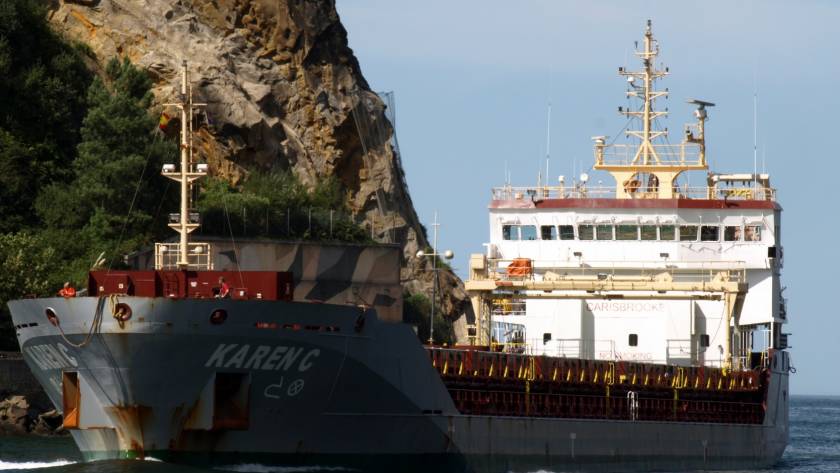
Following design and simulations, the hydrogen-fired engine will be bench tested in one of Brunel University’s world-leading, hydrogen-approved test cells before being integrated into a containerised system and mounted on the deck of one of Carisbrooke Shipping’s K-Class cargo vessels for a 40-day sea trial in early 2025.

Bureau Veritas and The Maritime and Coastguard Agency are also being engaged as the vessel’s regulatory authorities to ensure the fastest path to regulatory compliance. This will be among the first projects to achieve Approval in Principle for a Hydrogen power generation technology on board a UK Flagged vessel.

Decarbonising the Maritime sector

The global shipping industry faces an enormous decarbonising challenge, currently accounting for 3% of global Greenhouse gas emissions. Existing IMO regulations stipulate that by 2030, all vessels must reduce their CO2e per ton-mile 40% compared to 2008 levels, and by 2050 must be completely Net Zero.

Most cargo vessels are built with a 20+ year lifespan in mind which puts operators in a huge dilemma – existing vessels will not comply with 2030 regulations thus shortening their operational lifetime considerably and likely to loose money but new vessels cannot be ordered as technologies do not currently exist which can effectively and economically decarbonise their operations.

Some smaller vessels running shorter ranges will be able to consider electrification or fuel cells but for long-distance, ocean-going cargo vessels this is not viable. The costs, weights and practicalities become prohibitive and it is this bracket where engines offer a compelling solution, if they can operate in an economical and Zero emission manner.

This is where our technology comes in!

Carnot engine test rig
The Carnot Engine
The Karen C, Pioneering H2 at Sea

What is the project?

With our partners, we are developing a containerised and productised version of our 50kW engine operating on Hydrogen as an Auxiliary Power Unit demonstrator, to prove that our technology can be operated safely in the Maritime environment. This will be a valuable asset and precursor to planned 200-400 kW APUs and 1-10 MW main engines.

The APU will have at its heart, our revolutionary hydrogen combustion engine. By pioneering the use of technical ceramics in combustion engines, we have eliminated the major limiting factor to engine efficiency. Our engines have a break thermal efficiency of 70%, nearly double what is achieved by modern state-of-the-art engines which massively reduces fuel consumption and thus, reduces fuel costs. To deliver the same power output, our fuel consumption would be reduced by 45%.

Above a certain air-to-fuel ratio, hydrogen combustion emits zero emissions, i.e. negligible CO2, NOx and PM. Combined with world-beating efficiency, we believe Carnot engines will be the future propulsion and auxiliary power technology of choice within the Maritime industry.

The APU will go onboard a Carisbrooke Shipping K-Class vessel and underdo a 40-day sea trial through the Northern European, Baltic and Mediterranean seas. This will bring the technology up to TRL 6 and help validate the emission savings that we predicted during our CMDC 1 Grant project, namely targeting annual emission savings of:

  • 1,740 tons of CO2e
  • 357 CO2e tons of SO2
  • 470t CO2e tons of PM2
  • 178 CO2e tons of NOx

We will be working closely with our Classification Society partners Bureau Veritas, the Maritime Coastguard Agency, Insurance underwriters, charterers and Port authorities throughout the process to deliver the project safely and within the regulatory framework.

Who are the partners?

Our project partners for this include Carisbrooke Shipping, a family-owned business with over 50 years in business and has a long-standing commitment to innovation. The company’s philosophy is to lead the industry by building new, more efficient vessels to replace the existing ones and around 100 vessels were built at shipyards all over the world. Their previous project featured optimised bow design improving fuel efficiency by 20% compared to the existing similar ships on the market at that time.

We are then working with the Manufacturing Technology Centre (The MTC), a world leading organisation which focused on manufacturing expertise. They are bringing a wide range of skillsets including industrialising, manufacturing at scale and manufacturing for cost. They will help refine the design and supply chain to accelerate commercialisation and quantifying embedded CO2 emissions in the production process.

Brunel University are one of the leading research institutions in the UK on hydrogen combustion and they will bring expertise including test facilities, combustion simulation and design optimisation expertise.

Interested in finding out more?

If you would be interested in finding out more about this technology, deploying a hydrogen field trial or using these engines in your operations, please get in touch and fill out the form below:

The Carnot High Efficiency Hydrogen Combustion Engine Demonstrator project is part of the Clean Maritime Demonstration Competition Round 3 (CMDC3), which was announced in September 2022, funded by the Department for Transport and delivered in partnership with Innovate UK. As part of the CMDC3, the Department allocated £60m to 19 flagship projects supported by 92 UK organisations to deliver real world demonstration R&D projects in clean maritime solutions. Projects will take place in multiple locations around the UK from as far north as the Shetland Isles and as far south as Cornwall.

The CMDC3 is part of the UK Shipping Office for Reducing Emission’s (UK SHORE) flagship multi-year CMDC programme. In March 2022, the Department announced the biggest government investment ever in our UK commercial maritime sector, allocating £206m to UK SHORE, a new division within the Department for Transport focused on decarbonising the maritime sector. UK SHORE is delivering a suite of interventions throughout 2022-2025 aimed at accelerating the design, manufacture and operation of UK-made clean maritime technologies and unlocking an industry-led transition to Net Zero.